A Soul Stirring Visit to China: The Journey of Perception Reshaping for a Tanzanian Senior Economist
Aman Kipande Ng'oma
Senior Economist, Department Policy and Planning, Ministry of Minerals
A Deep Seated Heartfelt Bond With China From an Early Age
I had known about the People's Republic of China since I was a young boy in primary school. During those early years, my classmates and I were taught about the principles of socialism and self-reliance, a political and economic philosophy that we were told Tanzania had adopted with inspiration from China. As I progressed through primary school, secondary school, and eventually university, where I studied Economics, my understanding of China continued to grow.
Beyond what I learned in school, I came to know China as one of Tanzania's closest and most dependable friends. In 1965, Tanzania's founding President, Mwalimu Julius Kambarage Nyerere, paid a historic visit to China, where he was warmly received by Chairman Mao Zedong. Following that visit, China made the historic decision to support the construction of the Tanzania-Zambia Railway (TAZARA), one of Africa's greatest infrastructure projects. Construction began in 1970 and was completed in 1975, with the railway officially commencing operations in 1976.
Across decades, mutual trust, solidarity and joint efforts have solidified our bilateral friendship. Unlike many colonial powers, China has never colonized or exploited Tanzania. Instead, it walked alongside us as both nations pursued their own paths toward liberation and national development. For us, China is a longstanding partner that has stood with Tanzania in our pursuit of independence, development, and shared prosperity.
Sharp Disparity Between Western Reports and Personal Experiences
Before travelling to China, I had mixed opinions about the country.
Like many people around the world, I had been influenced by years of Western media reports portraying China as a nation that copied other people's inventions, manufactured cheap counterfeit products, and struggled with the challenges of its enormous population. Those reports shaped much of my perception.
I had seen Chinese engineers and technicians constructing government buildings, highways, bridges, railways, and other major infrastructure projects across Tanzania. They impressed me as hardworking, disciplined, innovative, and highly skilled professionals who never seemed intimidated by difficult tasks. Today, many manufacturing industries operating in Tanzania are owned by Chinese investors, creating employment opportunities for thousands of Tanzanians and contributing significantly to people's livelihoods. I often found myself puzzled why Chinese technical professionals with such outstanding performance are depicted so differently in Western media reports.
Actually,one characteristic I admired long before visiting China was the humility of the Chinese people. Despite their achievements, they rarely boast. They work quietly, remain focused, and let their accomplishments speak for themselves. For many Tanzanians, the Chinese are not simply foreign investors, they are respected friends.
My Training Visit to China Brings My Dream to Reality
Never in my life did I imagine that one day I would travel to China as part of an official delegation of twenty-five leaders from the Chama Cha Mapinduzi (CCM) and senior Government officials from Tanzania.
Sometimes a chance encounter is enough to transform one's life, and fortune smiled upon me this time: I was fortunate enough to be nominated to participate in the Seminar for Party Leaders and Government Senior Officials of Tanzania. I received the invitation with immense excitement and gratitude. It was a once-in-a-lifetime opportunity to witness China firsthand and learn directly from its remarkable development experience. It also afforded me a golden opportunity to verify Western‑media narratives.
After completing the necessary documentation and obtaining my visa, I prepared for the journey.
Our journey began on 14 June 2026, when we departed Dar es Salaam aboard Ethiopian Airlines via Addis Ababa. After a long-haul flight of nearly 12 hours, we finally entered China via Shanghai and later took a connecting flight to Qingdao.
Upon arrival at Qingdao International Airport, our Chinese hosts welcomed us with exceptional warmth and hospitality before escorting us to our hotel. Their kindness gave us an unforgettable first impression of China. Though fatigued from the long journey across mountains and seas, we received thoughtful and meticulous hospitality. Our first glimpse of Qingdao's warmth stirred within me greater anticipation for this China bound trip, for I hoped to witness a different side of China.
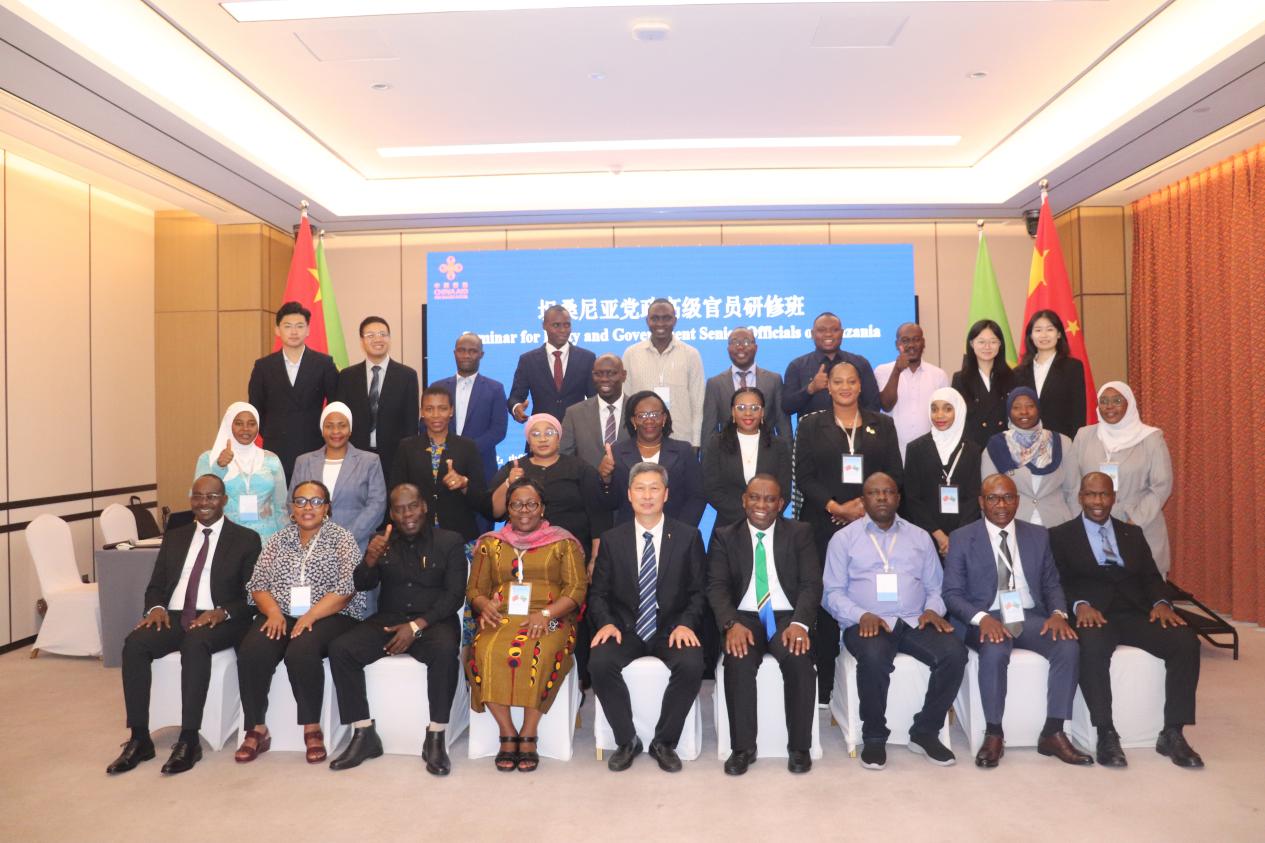
Fig 1. Group Photo of Tanzanian Officials at the Opening Ceremony
Gaining Insight Into Real World China’s Development Through Classroom Theory and Field Visits
Our training officially commenced on 16 June 2026.
From the very beginning, I was impressed by the professionalism with which every session was organised. The programme perfectly combined classroom learning with practical field visits, enabling us to understand China's development model from both academic and practical perspectives and witness tangible development achievements with our own eyes through on-site visits.
During this training programme, I travelled across three cities‑Beijing, Qingdao and Shanghai, which completely overturned my previous perceptions of China's development. In Qingdao, we visited the municipal social‑security service centre to explore the essence of the government's people‑oriented public services. In Beijing, we paid a visit to the Museum of the Communist Party of China History. We also climbed the Great Wall to become “true‑hearted heroes” and appreciated the cultural connotations of Beijing as a Dual‑Olympic City. In Shanghai, we experienced the Bund’s profound history and modern day prosperity.
These landmarks and industrial platforms we toured spanned a wide range of fields. Every on‑site visit transformed the abstract theories from textbooks into visible and tangible real‑life scenarios. These visits transformed the theories we had learned in class into real-life experiences.
What impressed me most was not only the scale of development but also how carefully it had been planned. Economic growth appeared to benefit both major cities and smaller communities. Development was not concentrated in one location; it was visible almost everywhere we travelled.
I was particularly fascinated by China's high-speed electric railway system. The trains were modern, exceptionally clean, comfortable, quiet, and incredibly fast. As we travelled between Qingdao, Beijing, and Shanghai, I observed countless towns and cities along the railway corridors. Nearly all of them displayed impressive levels of development.
Compared to many countries I have previously visited, China stood apart.
Its infrastructure, urban planning, technological advancement, and efficiency reflected decades of strategic planning and disciplined implementation.
At this moment, stereotypes shaped by Western‑media reports are gradually broken down. I have come to understand China little by little. Although China is undoubtedly among the world's leading economic powers, one thing surprised me greatly: unlike many developed countries, China does not constantly seek international publicity. Rather than investing heavily in media campaigns and political propaganda, China seems to allow its achievements to speak for themselves.
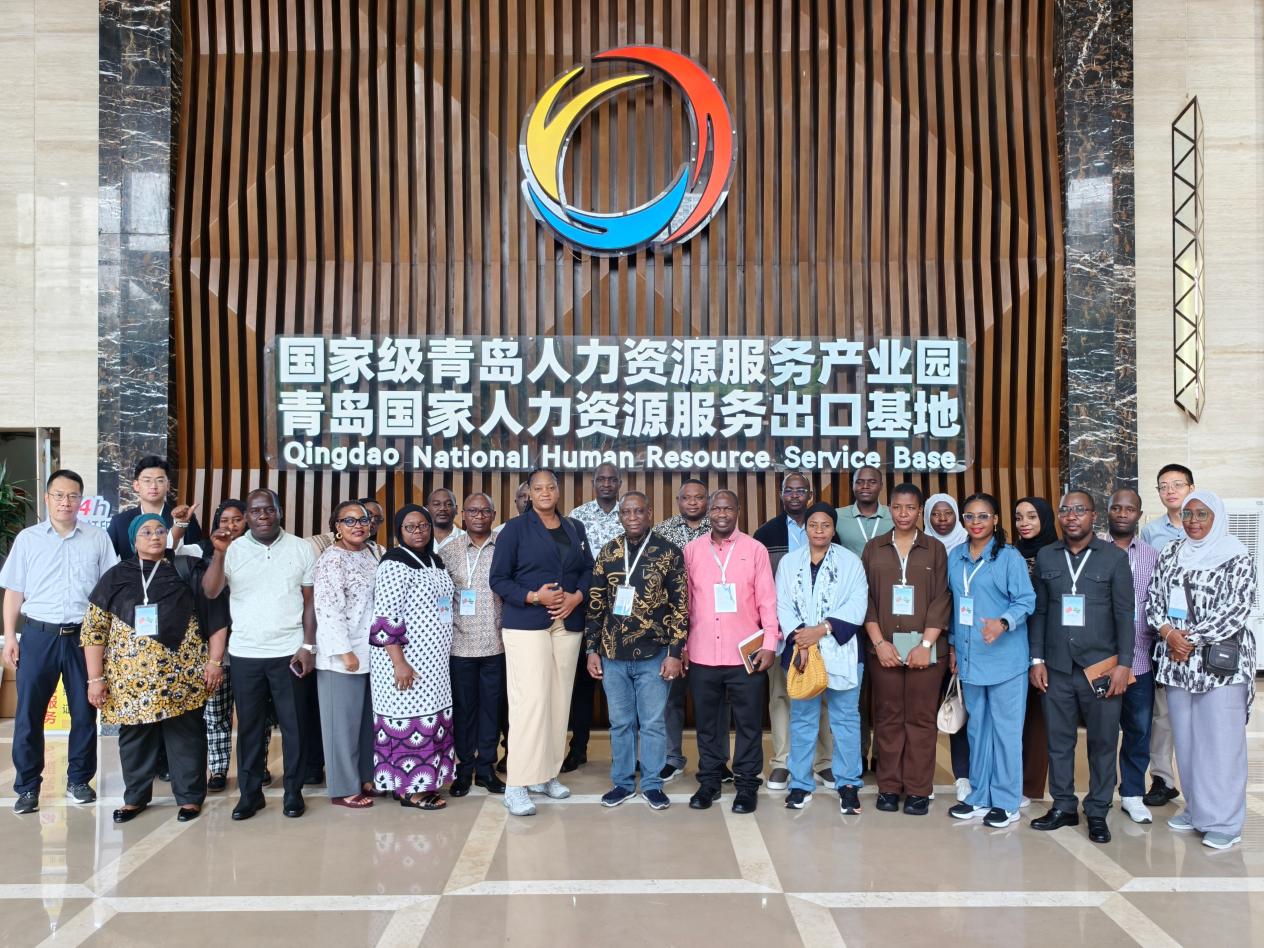
Fig.2 Aman Kipande Ng'oma and Other Officials Visiting the Municipal Social-security Service Centre of Qingdao
Encounters with Ordinary Chinese People: Experiencing Sincere Goodwill Beyond Language Barriers
Perhaps my greatest discovery during this journey was the character of the Chinese people themselves. During my stay, I found them to be courteous, respectful, kind, and genuinely willing to help visitors.
Although many Chinese people speak only Mandarin, communication was rarely a problem. Whenever someone could not speak English, they would immediately use a translation application on their mobile phone, allowing conversations to continue smoothly. We simply exchanged the phone back and forth while speaking into it until the communication was complete. This simple gesture demonstrated something much deeper than technology, it reflected their willingness to help.
More importantly, I never experienced exploitation, hostility, or discrimination. Instead, I encountered kindness, patience, honesty, and generosity. By the end of my visit, I had developed a profound admiration for the Chinese people. Sometimes I found myself thinking that if more people around the world treated one another with the same humility, respect, and kindness that I experienced in China, our world would undoubtedly be far more peaceful. Indeed, my firsthand experience of close interactions with ordinary Chinese residents during my stay in China has once again shattered the one-sided perceptions fostered by Western media reports deep within my heart.
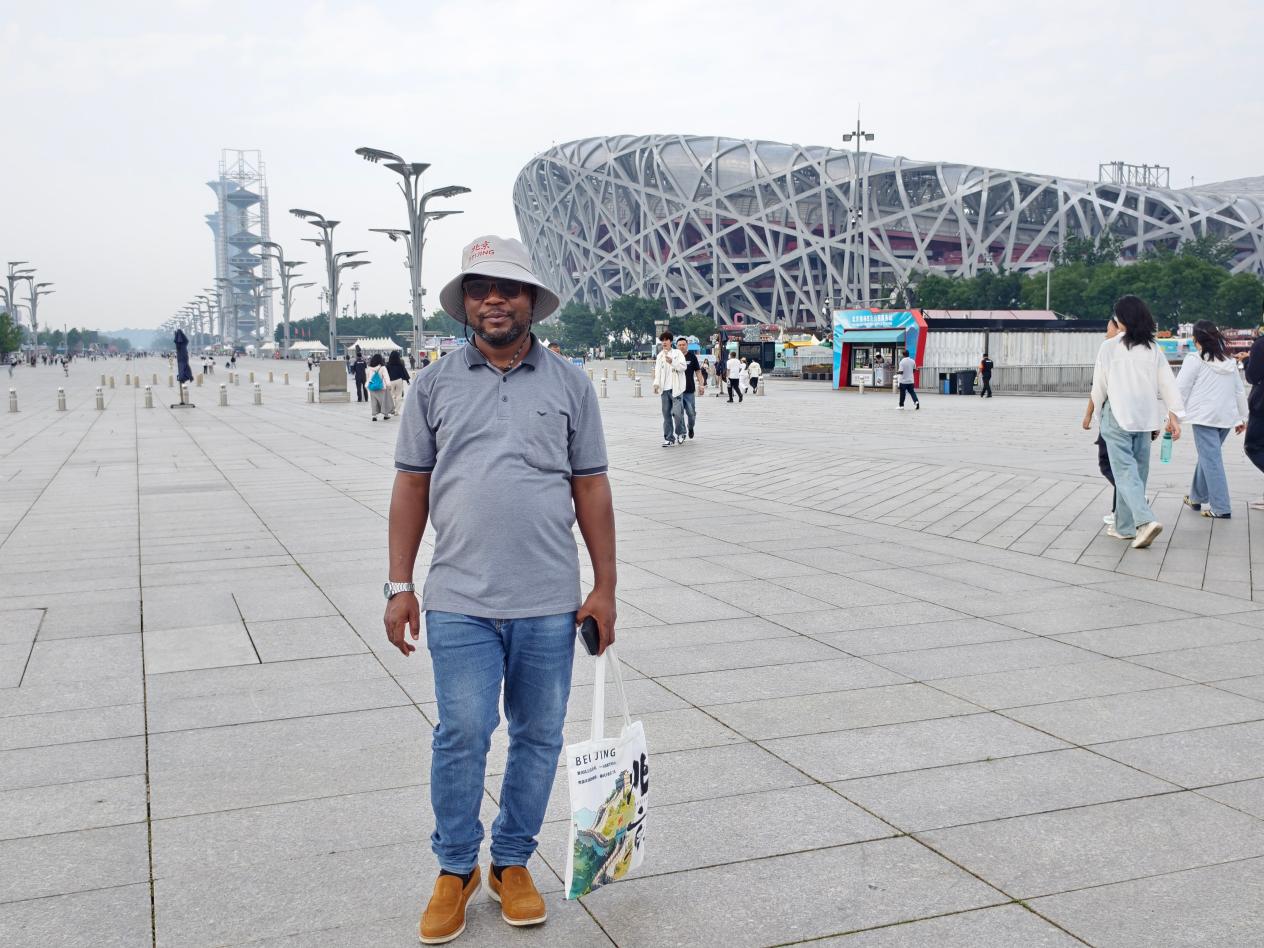
Fig. 3 Aman Kipande Ng'oma in Beijing Olympic Sports Park
Made-in-China Products Break Ingrained Prejudices
Before coming to China, I had heard many negative opinions about Chinese vehicles. However, after seeing them firsthand and learning more about their engineering, my perception changed completely. They are stylish, comfortable, remarkably quiet, and available in a wide variety of modern designs. In fact, I jokingly told some of my friends and fellow delegates that I would no longer import my next vehicle from Japan. God willing, my next car will come from China.
I was particularly impressed by the performance of Yutong buses, manufactured in Zhengzhou, Henan Province, and HOWO heavy-duty trucks, produced in Jinan, Shandong Province. Both brands have already established a strong reputation in Tanzania and continue to perform exceptionally well. Likewise, I observed the widespread popularity of Chinese consumer products such as Hisense televisions and Haier household appliances, including refrigerators, washing machines, air conditioners, televisions, and many other home appliances. These products have gained considerable acceptance not only in Tanzania but across Africa because of their quality and affordability.
I was equally impressed by Huawei, one of China's leading technology companies, whose smartphones, laptops, smartwatches, telecommunications equipment, and other innovative products demonstrate the country's remarkable technological advancement. Huawei products were once extremely popular in Tanzania, although they are less common today for reasons, I do not fully understand.
Given Africa's rapidly growing population and expanding consumer market, I sincerely hope that more Chinese companies will continue strengthening their presence across the African continent. Africa offers tremendous opportunities for mutually beneficial trade, investment, and long-term economic partnership.
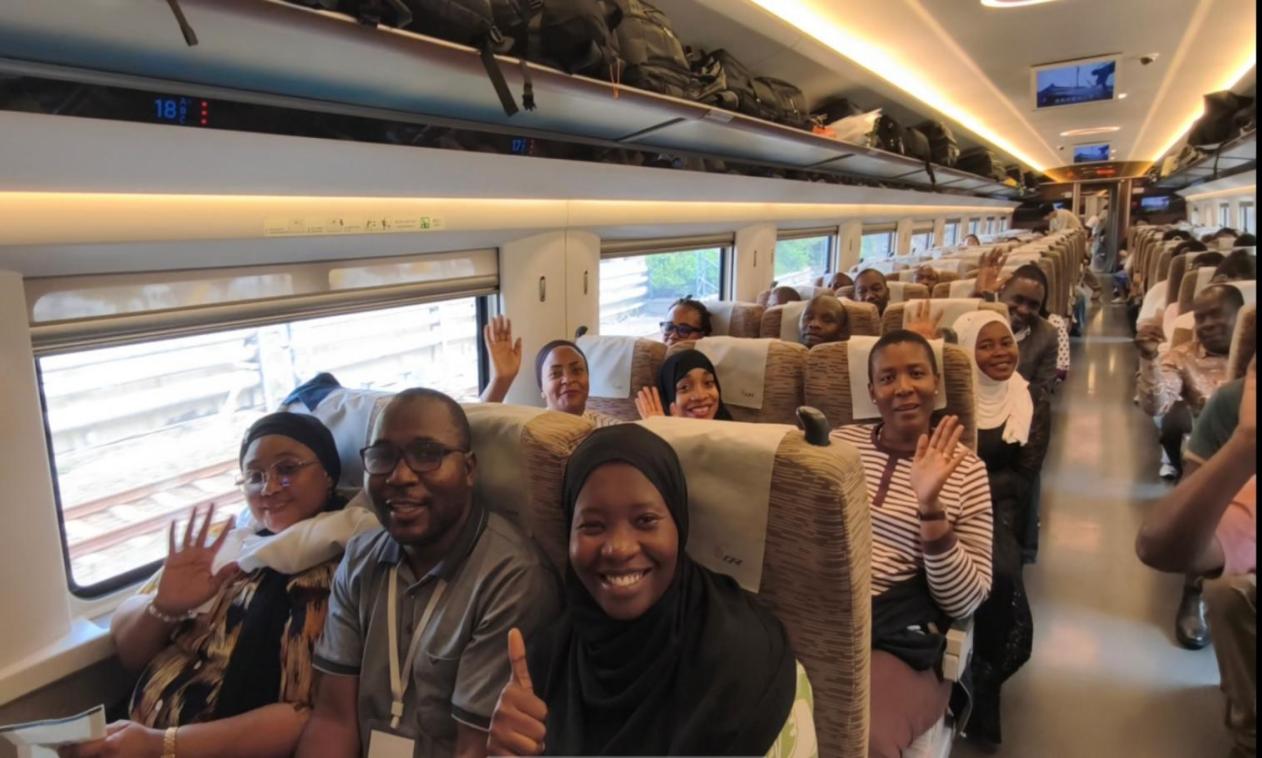
Fig. 4 Aman Kipande Ng'oma Taking China's High-speed Train
Witnessing the Great Nation's Rise Has Provoked Abundant Reflections
It has been more than one month since I returned to Tanzania, yet the lasting impact of this training programme remains powerful and inspires a wealth of reflections.
First, the sound anti‑corruption governance mechanism within China's Party‑and‑government system has yielded remarkable results. Corruption stands as a stubborn ailment hard to overcome for many African countries including Tanzania. After witnessing China's mature supervision and restriction system for public servants, I have deeply recognized the decisive influence of a sound institution upon long‑term national development.
Second, the Chinese people are warm-hearted, open‑minded and inclusive toward foreign guests. Sincere smiles greeted us wherever we travelled. Many local residents would come forward politely to ask for photographs with us. Such pure-hearted enthusiasm kept us warmly embraced even in a foreign land.
Third, self‑reliant whole‑industrial‑chain development underpins the nation's confidence for growth. Ranging from family use automobiles, high‑speed railways, smart‑phones and heavy-duty industrial machinery to high-end engineering manufacturing, China has built complete local industrial chains for nearly all industries. The whole nation also embraces an enterprising conviction that “nothing is impossible”. Engineering marvels we came across, such as sea-spanning bridges, mountain-penetrating tunnels, multi‑storey elevated roads and underground rail transit, are far more than construction projects. They serve as spiritual symbols demonstrating this nation's resolve to turn grand blueprints into tangible reality.
Fourth, balanced nationwide development keeps narrowing the urban‑rural divide. Modern‑day infrastructure is never confined to big metropolises. Rural areas are also furnished with new‑style residences, standardized factories and comprehensive highway and railway networks. Many urban‑rural fringes bear no clear dividing‑line. Quality public services are accessible across all regions, which fully embodies the development philosophy of top‑level national planning and enabling all citizens to share the dividends of progress.
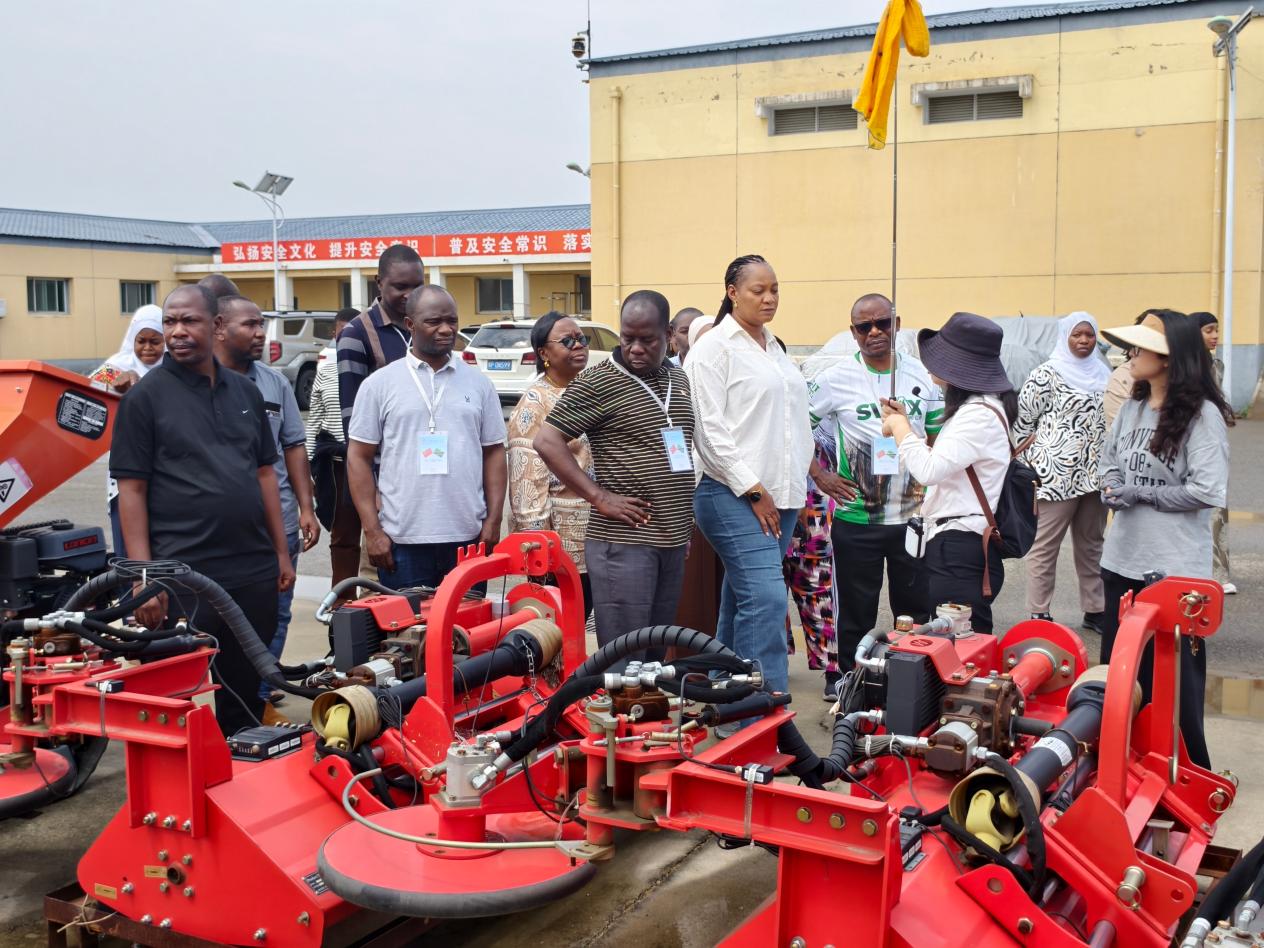
Fig. 5 Aman Kipande Ng'oma on a Field‑visit to Chinese Agricultural Equipment
My 14-day Stay in China Has Thoroughly Reshaped My Perceptions
Throughout the field visits, I have witnessed how the Chinese people combine self‑discipline, diligence, innovation and wisdom to build a prosperous life for their nation and future generations. This united and hard‑working spirit has etched itself deep in my heart and will continue to bring about transformations within me in the years ahead.
It is impossible to fully describe China in just a few pages. The beauty of the country, the discipline and humility of its people, their extraordinary work ethic, visionary leadership, effective governance, and high-quality education system all left a profound impression on me.
Nevertheless, the most precious gain from this long‑distance journey lies in the thorough reshaping of all my perceptions of China. I set off with nothing but curiosity, yet I returned equipped with acquired knowledge, sincere admiration and a brand‑new understanding of this great country. This treasured experience will stay vivid and unfaded for my entire lifetime.
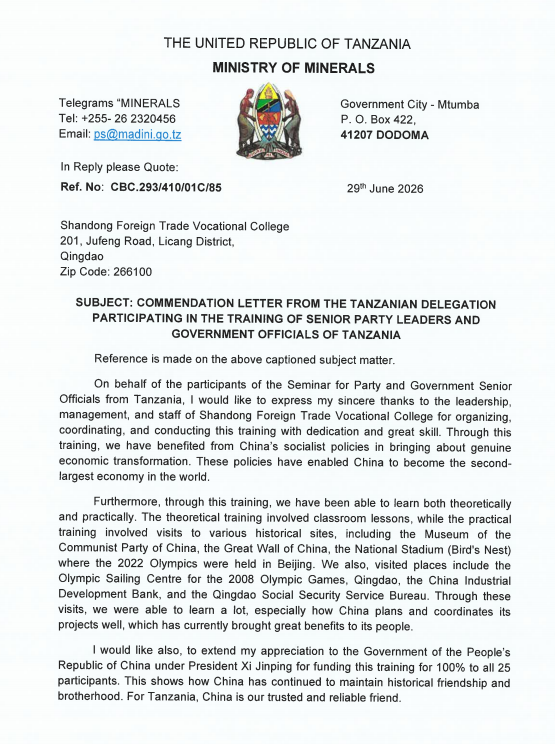
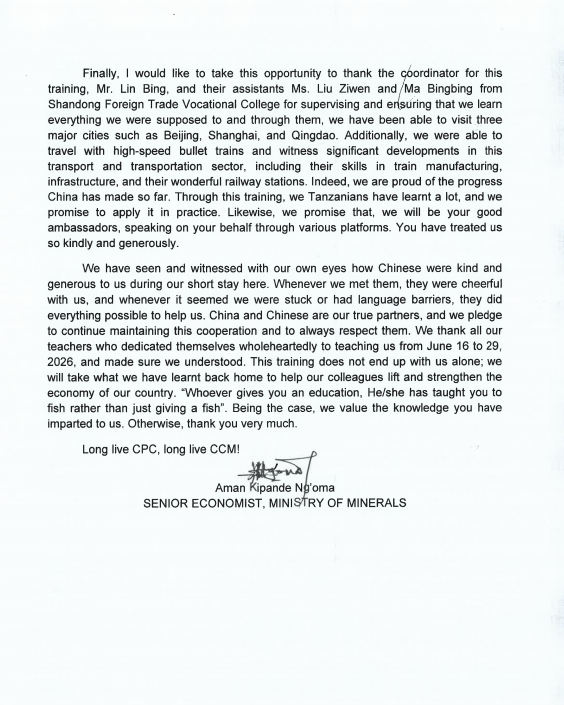
Fig. 6 Commendation Letter from Aman Kipande Ng'oma upon His Return to Tanzania